
HOTLINE:
+84 919 200 009
EMAIL ADDRESS:
Haianhduong14@gmail.com
HOTLINE:
+84 919 200 009
EMAIL ADDRESS:
Haianhduong14@gmail.com
Home / technical consulting / Ultrasonic Testing and Bolt Tightening Control: Essential Factors Ensuring Steel Structure Safety
The safety of a steel structure does not depend solely on design or materials, but also on the quality of construction and post-installation inspection. Welds and bolted connections are the most critical load-bearing points within the structure. Any defect occurring at these points can directly affect the stability of the entire system. Therefore, ultrasonic inspection and bolt tightening control are essential procedures in steel structure quality assurance.
Inspection is not merely the final checking stage but an integral part of the overall quality control process. Especially in industrial buildings, pre-engineered steel structures, bridges, and heavy-load structures, early defect detection helps minimize risks and repair costs.
Common defects caused by improper inspection include:
These issues cannot be detected by visual inspection alone and require advanced testing methods.
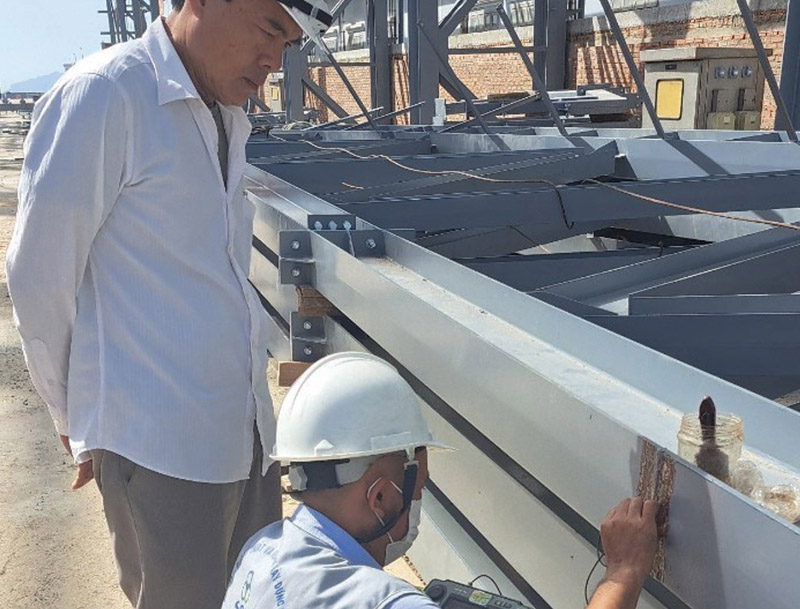
Ultrasonic Testing (UT) is a Non-Destructive Testing (NDT) method that uses ultrasonic waves to detect internal defects within metallic materials.
Ultrasonic waves are transmitted into the material. When they encounter defects, the waves reflect back to the device, allowing the system to identify the location and size of the flaw.
UT is commonly applied in projects with high safety requirements such as factories, steel bridges, storage tanks, and industrial structures.
In addition to ultrasonic testing, the non-destructive testing system includes various methods to ensure comprehensive quality control:
Applying multiple inspection methods simultaneously increases the reliability of acceptance results.
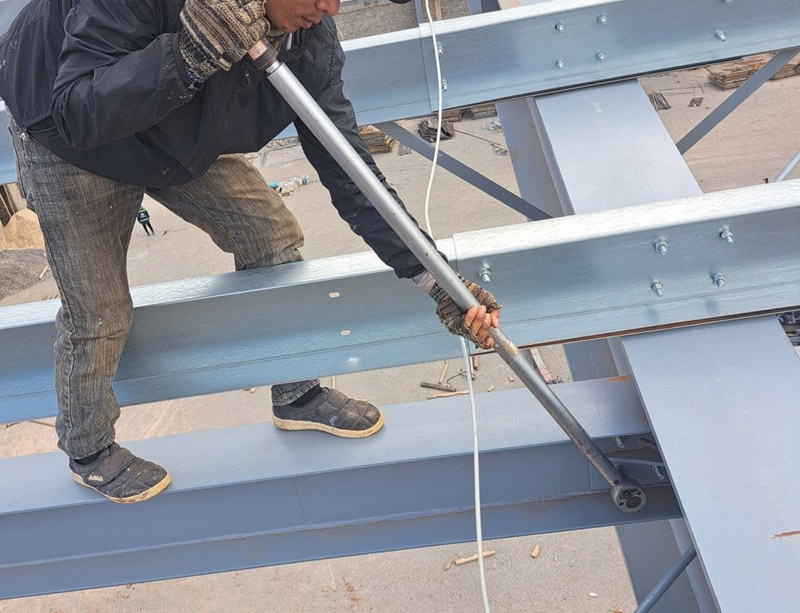
Bolts in steel structures are not merely fastening components they also function as force-transmitting elements. Incorrect tightening force can lead to loose connections or structural overload.
Bolt tightening control must be based on:
Large-scale projects often require tightening force inspection using torque or tension measuring devices to ensure accuracy.
To ensure consistent quality, steel structure projects must comply with both international and Vietnamese standards.
These standards serve as the foundation for evaluating quality from design and materials to construction and inspection.
Not every contractor has the capability to perform all inspection procedures according to standards. Insufficient inspection capability may result in:
A qualified contractor should:
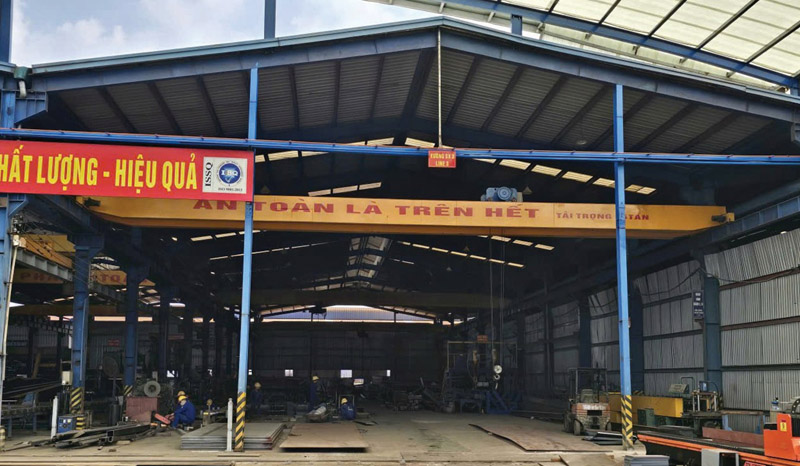
Hai Anh Duong Co., Ltd. not only focuses on manufacturing and installation but also emphasizes inspection and acceptance procedures based on technical standards.
The company currently applies both international and Vietnamese standards throughout project implementation, including:
In addition, Hai Anh Duong actively applies modern inspection methods to ensure actual project quality:
For bolted connections, the company controls tightening force according to technical standards, ensuring every connection point achieves the required load-bearing capability and long-term stability.
The inspection and acceptance process is professionally established from manufacturing to on-site installation, helping to:
Ultrasonic inspection and bolt tightening control are not simply inspection procedures they are critical factors determining the safety and lifespan of steel structures. Applying proper standards, correct inspection methods, and ing a qualified contractor help businesses minimize risks and optimize investment efficiency.
With a clear standards system, modern inspection methods, and professional operational procedures, Hai Anh Duong effectively meets inspection and acceptance requirements for steel structure and industrial construction projects.
CATEGORIES
School Building – District 12, Ho Chi Minh City, Floor Area 2,500m²
Steel Structure for Viettel Logistics Factory – Da Nang, 12,000m²
VIAGS Steel Structure – Long Thanh Airport
VIAGS Steel Structure – Long Thanh Airport
School Building – District 12, Ho Chi Minh City, Floor Area 2,500m²
Aircraft Hangar – Tan Son Nhat Airport
Logistics Warehouse – Long Thanh, 75x215m
Logistics Warehouse – Long Thanh, 75x215m
Aircraft Maintenance Workshop – Phan Thiet Airport
Aircraft Maintenance Workshop – Phan Thiet Airport
Ship Hull Cleaning Workshop – Region 4, Cam Ranh, Height 38m
Ship Hull Cleaning Workshop – Region 4, Cam Ranh, Height 38m
Material Processing Workshop – Ba Son Shipyard, Cai Mep
Material Processing Workshop – Ba Son Shipyard, Cai Mep
Production of Arch Trusses for Ben Cat Gymnasium
Production of Arch Trusses for Ben Cat Gymnasium
Binh Dien Fertilizer II – Long Hau Industrial Park, Long An, 13,700m²
Viettel Logistics Factory – Da Nang, 26,000m²
Factory – Long Khanh Industrial Park, 20,000m²
Molasses Storage Tank – Go Dau Port, Dong Nai
Molasses Storage Tank – Go Dau Port, Dong Nai
Molasses Storage Tank – Go Dau Port, Dong Nai
Oil Storage Tank – Diameter 45m, Height 22m
Road Traffic Safety Accessories
Road Traffic Safety Accessories
Road Traffic Safety Accessories
2x6m Laser Cutting Machine – Cuts Steel Plates up to 20mm Thick
6m Steel Plate Cutting Machine – Cuts Plates up to 16mm Thick
Corrugated Sheet Rolling Machine (Guardrail Forming)
Shot Blasting Machine for Product Cleaning
2x6m Laser Cutting Machine – Cuts Steel Plates up to 50mm Thick
2x6m Laser Cutting Machine – Cuts Steel Plates up to 50mm Thick
Paint Sample Inspection at Factory
Paint Sample Inspection at Factory
Paint Sample Inspection at Factory
Ultrasonic Inspection – Bolt Torque Testing
Ultrasonic Inspection – Bolt Torque Testing
Ultrasonic Inspection – Bolt Torque Testing
Featured Products & Services
*YOU MAY ALSO LIKE
Hai Anh Duong is committed to providing safe, on-schedule, and cost-effective solutions for every partner and investor.
Address: 14/B4, Group 1, Quarter 7, Long Binh Ward, Dong Nai, Vietnam
Hotline: +84 919 200 009
Email: Haianhduong14@gmail.com
HAI ANH DUONG COMPANY LIMITED focuses on development through technological innovation, enhancing the capabilities of its engineering team, and promoting research into practical solutions for industrial and civil applications. We are honored to cooperate with and serve companies nationwide!
HAI ANH DUONG COMPANY LIMITED
Address: 14/B4, Group 1, Quarter 7, Long Binh Ward, Dong Nai, Vietnam
Hotline: +84 919 200 009
Email: Haianhduong14@gmail.com
HAI ANH DUONG COMPANY LIMITED
Địa chỉ: 14/B4, Group 1, Quarter 7, Long Binh Ward, Dong Nai, Vietnam
Business Registration License No. 3602397164 – Issued by the Department of Planning and Investment of Dong Nai Province on October 30, 2010
Responsible for content: Truong Van Hung
@ Copyright by HAI ANH DUONG COMPANY LIMITED. Designed by Vietnam Yellow Pages.


